
As I took my seat in a private screening of Mortal Kombat II, invited by Warner Bros., I couldn’t help but reflect on how important it is to have diverse voices engage in conversations around some of entertainment’s most enduring franchises, especially when those voices come from outside the franchise’s traditional audience like myself.
Despite being an avid gamer, martial artist, and Stuntwoman, Mortal Kombat had never quite made it into my gaming landscape, and I was sure that I was most likely not Warner Bro.’s ideal target audience; someone completely unfamiliar with the franchise. But in the days leading up to the screening, I was open and eager to be welcomed into their world.
For the better part of two whole days, I dove headfirst into researching the decades-rich lore, fan-favourite characters, and cultural impact of the games. This crash-course had me passionately invested in the franchise, and yet, despite entering the cinema as a fresh-eyed newcomer, I couldn’t shake the feeling that the film had only scratched the surface.
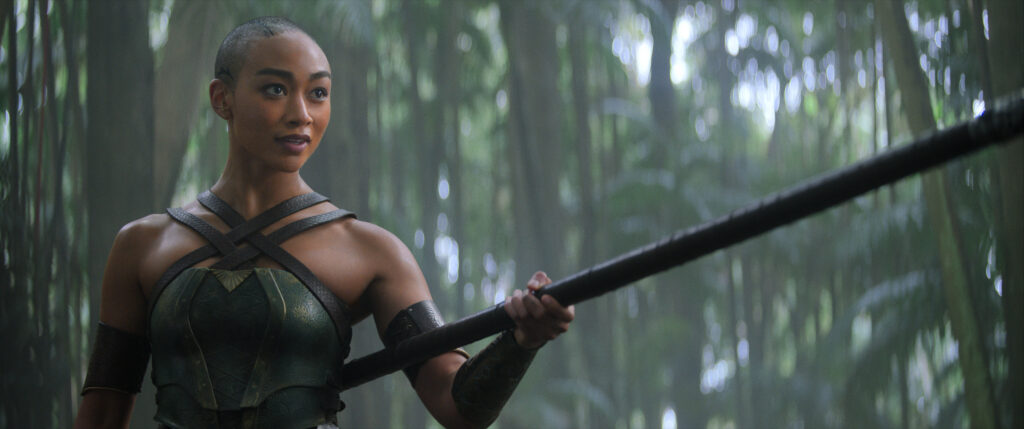
In many ways, Mortal Kombat II, written by Jeremy Slater and directed by Simon McQuoid, feels like a clear step up from its 2021 predecessor, with a more narratively confident storyline that feels cohesive to the lore and backstory of the games.
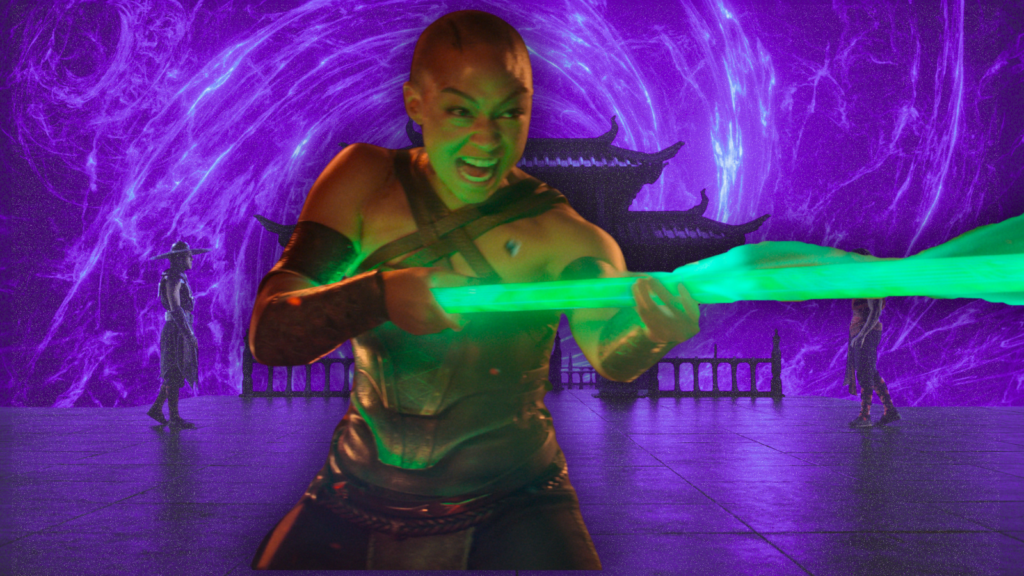
There are so many moments where the film, starring Tati Gabrielle as Jade and Karl Urban as Johnny Cage, genuinely shines. Its stunt work and fight choreography, most notably that of Scorpion (Hiroyuki Sanada) and Kung Lao (Max Huang), were incredibly well designed with complexity and innovation. Visually, the film is ambitious in its set design, where it pays clear homage to the eye-catching arena style of the games. At its best, the film strikes a balance between nostalgia and visual freshness, creating moments that feel both familiar and excitingly new.
What I will say, is that for a franchise built on fatalities, brutality, gore, and larger-than-life spectacle, Mortal Kombat II felt surprisingly safe. It existed in an awkward middle ground that was bubblegum soft for children and never fully committed to hit that mature chaos and unapologetic edge that made the ‘90s franchise iconic in the first place.
This hesitation is becoming a wider strategy issue with game-to-screen adaptations. Studios appear increasingly afraid to lean fully into the identities of the franchises they are adapting, often softening the edges in pursuit of larger audiences. Paramount+’s live-action Halo, which premiered in 2022, exemplifies this trend. Its opening episode was explosive, experimenting with first-person shooter perspectives that confidently echoed the experience of playing the games. Yet as the series progressed, it became something much closer to a family-friendly romance, distancing itself from the qualities that had defined the franchise and earned it such a devoted following. To no one’s surprise, Paramount+ confirmed the show’s cancellation after two seasons in 2024.
The would-have-been live-action Teenage Mutant Ninja Turtles met the same fate before it even reached production. After many rumors and almosts, Paramount Pictures confirmed in November 2025 that the R-rated adaptation of The Last Ronin has been shelved for the time being. While a formal reason hasn’t been released, it’s safe to assume that the studio isn’t keen on being the first to create a non-animated version in 10 years, and it would be a bloodbath, especially when the corporation has bigger problems to worry about and The Last Ronin video game to promote.
This decision, unsurprisingly, frustrated longtime fans who grew up with the comics. However, in all fairness, TMNT wasn’t created with an adult audience in mind—originating as a children’s comic in the mid-80s and then quickly adapted into a series—so keeping it accessible to younger audiences makes sense.
Mortal Kombat, however, feels like a very different conversation. It was never created with a family-friendly identity in mind. Its legacy was built on shock value and violence, and whilst the film somewhat gestures toward those elements, does it really truly embrace them?
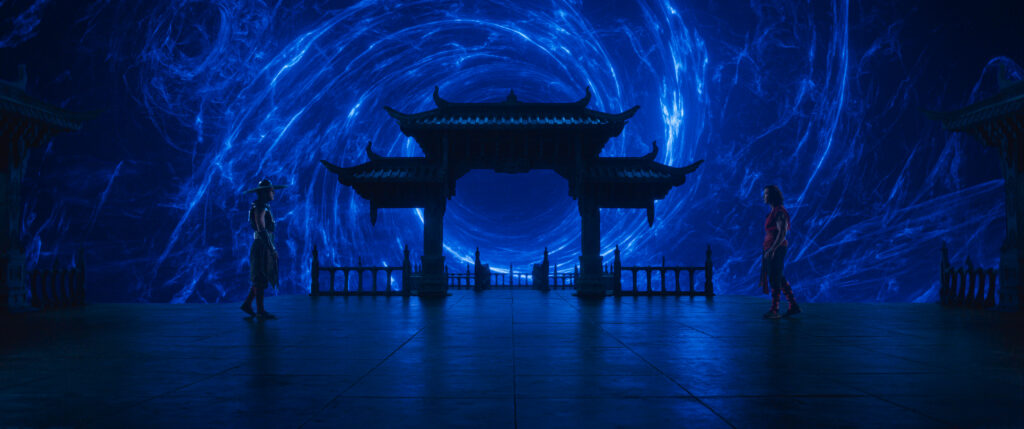
Even visually, there were missed opportunities. The games are famously built around 1v1 arena combat, with stylised staging and dramatic character entrances that feel incredibly theatrical. Although the film occasionally nods to this aesthetic with brief shots in its fight scenes, it is never maintained and pushed far enough to become memorable. The fight scene between Jade and Jax (Mehcad Brooks) in particular felt as though, instead of fully embracing the operatic madness of fighting in the Mortal Kombat arena, it softened the edges and retreated back into the familiar rhythms of an MCU backdrop.
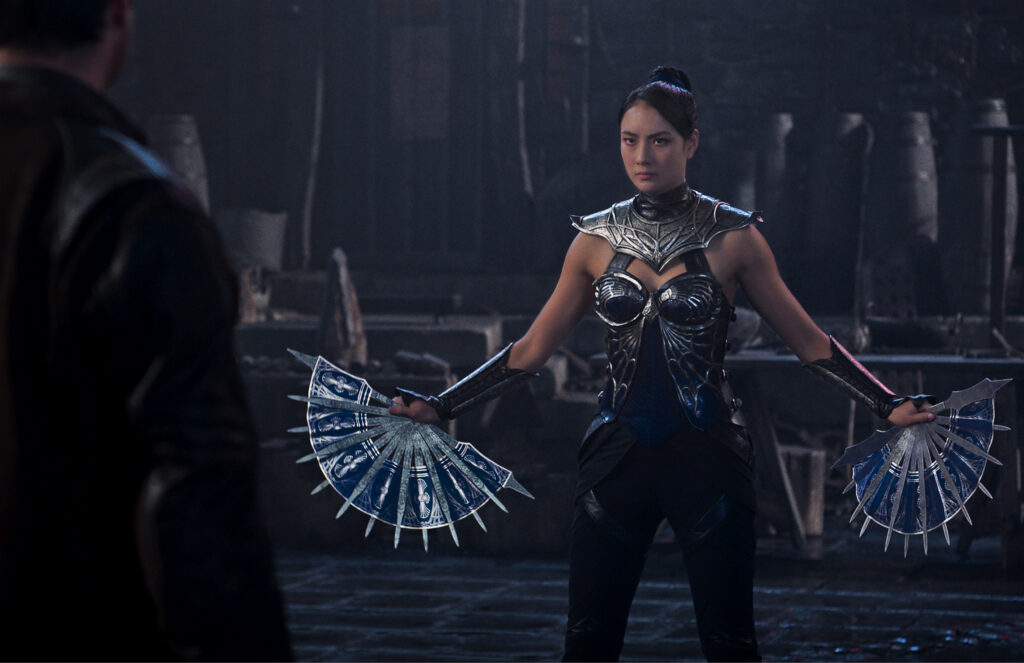
The lack of consequence also weakened the experience. The sudden, almost throwaway death of Cole Young (Lewis Tan) with a single swing of Shao Kahn (Martyn Ford)’s hammer landed with an unexpected sense of comedy rather than consequence. Young, who was not part of the original Mortal Kombat franchise, was positioned as the emotional centre in the first film, so his abrupt death in this sequel felt like a deus ex machina-style deletion of a character who never quite resonated with audiences. This very quickly slipped into meme territory online–something that should have carried truly significant emotional weight instead became humorous and hollow, with little downtime given for impact or aftereffect.
I couldn’t quite swat the feeling that this film desperately needed the confidence of something like Game of Thrones, where every scene feels visceral, or the stylised commitment of a Quentin Tarantino film–unafraid to indulge in grit, unflinching nerve, or raw eccentricity.
Ironically, much of the film’s personality comes from Kano (played by Josh Lawson), whose performance often felt more alive and spontaneous than the script surrounding him. Scenes involving Kano and Quran Chi (Damon Herriman) were notably outrageous for their crude humour and had audiences audibly laughing in the cinema. However, the lines of other characters often teetered on the ever-dreaded cliff edge of cringe, or simply fell flat as dialogue felt overly explanatory. Even for me, the film felt too eager to guide the audience by the hand rather than trusting us to sit within the world and explore it organically.
This film truly excels when it allows its characters the space to inhabit who they are, but, ironically, it becomes noticeably less confident in other areas of its world-building and legacy characters.
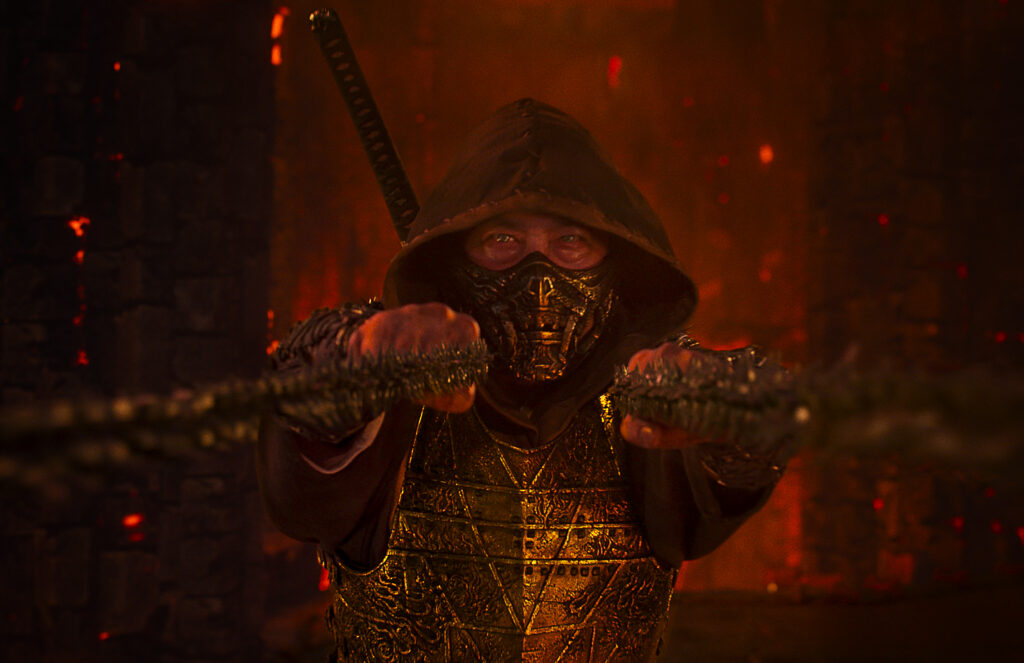
For veteran fans, the refusal to explicitly identify Bi-Han’s resurrection as Noob Saibot (Joe Taslim), I’m sure, must be incredibly frustrating. Within Mortal Kombat lore, Bi-Han’s death and subsequent rebirth as Noob Saibot is not simply a costume change; it is a pivotal evolution and one of the franchise’s most iconic narrative reveals. The name “Noob Saibot” itself is canon as it was created by spelling the surnames of Mortal Kombat creators Ed Boon and John Tobias backwards. The character was originally an Easter egg–first appearing in the original arcade game as Sub-Zero–as a secret shadow-figure with broken abilities.
The franchise was fully committed to that transformation in the 2004 Mortal Kombat: Deception game release by allowing Noob Saibot to exist as his own identity, rather than merely referring to him as Bi-Han. The film, by contrast, seems oddly hesitant to take that final step.
Fun fact: Noob Sailbot is one of the earliest Easter Eggs in Mortal Kombat. In 2021, Tobias spoke about the character’s creation on social media, writing, “I vaguely remember confronting Ed on it and asking him to please let me know when he adds a secret character or secret anything to the games.”
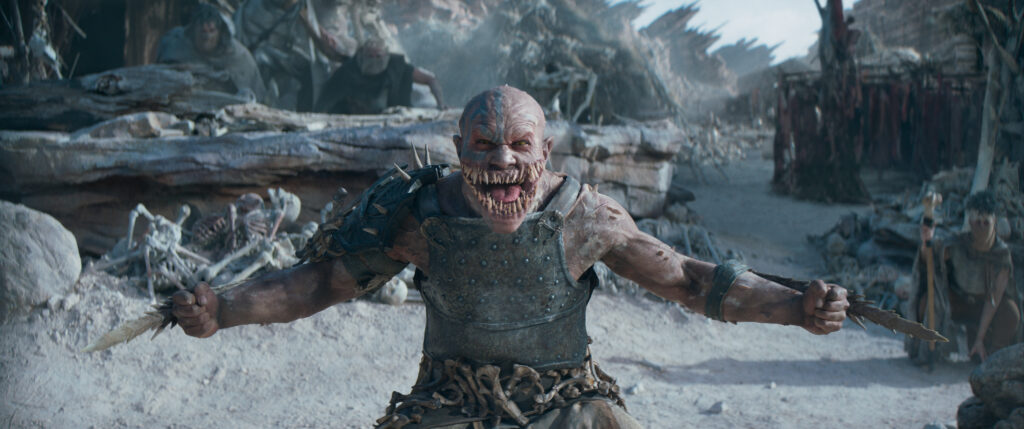
After a while, even smaller details became distracting. Background actors occasionally felt disengaged within scenes. I even watched a few faffing with their costumes on several occasions. But the pièce de résistance of my frustrations was the repeated mispronunciation of Kitana’s name, being pronounced too closely to “Katana” for even my liking.
I came in expecting chaos and a film unafraid to push itself to extremes. Instead, I left wanting to reach for my Xbox controller so I could play the real thing and give myself a hit of the true Kombat essence that the film just couldn’t quite touch.
Ultimately, Mortal Kombat II is entertaining, funny, visually slick (in places), and is elevated by strong stunt work and flashes of genuine fan service. But for a franchise as bold, excessive, and culturally influential as “Finish Him!”, entertaining simply is not enough.