
For a young Black girl nerd obsessed with fantasy, sci-fi games in the 90s-2000s, the landscape for finding representation was dry and bare. It was like traversing a desert where once in a while, between the heatwaves of exclusion and sexism, you’d catch a glimpse of a Black woman character that would come to be. And when you finally got to play said character, the flaws were obvious; a symptom of often being created by minds that had no genuine connection to Black womanhood (though I am grateful for D’arcy Stern’s existence, she has some eye-squint worthy qualities). Gaming as a young Black girl was rough at times, I was parched and desperate to find someone to relate to.
Then, in 2003, Enter the Matrix was released, the spin-off ofThe Matrix Reloaded. The Matrix, and the universe that followed it, had taken the world by storm not just by breaking cinematic barriers with its dystopian sci-fi storyline, special effects and martial art sequences but also by way of style. The costume design was simplistic, edgy yet chic and was intentional for every character. The cast of the movies, and their styling, was inclusive and because of that The Matrix look remains one of the most iconic movie aesthetics of all time.
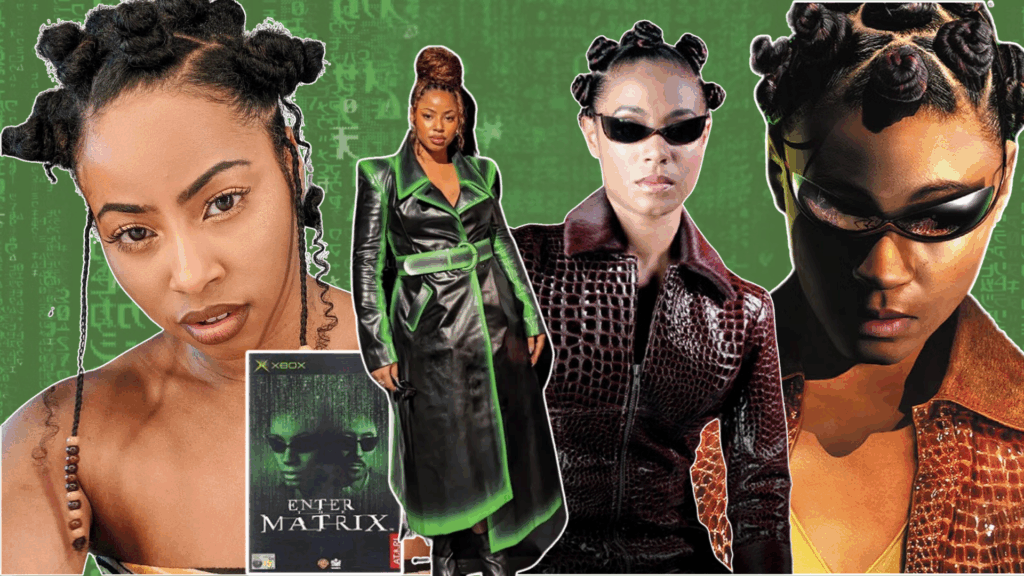
With the release of The Matrix Reloaded and Enter the Matrix came the birth of Niobe. A Black woman character portrayed by Jada Pinkett-Smith in the game and the movie. She was a breath of fresh cool air. Her hair? Perfectly laid in bantu knots. Her style? Flawless. She wore custom-crafted sunglasses by Blinde Design Project (like every character in the film) paired with a maroon coloured crocodile overcoat. Sis was the most fashionable person in The Matrix by far. Her conception blew my tiny little mind, there was no one like her on screen.
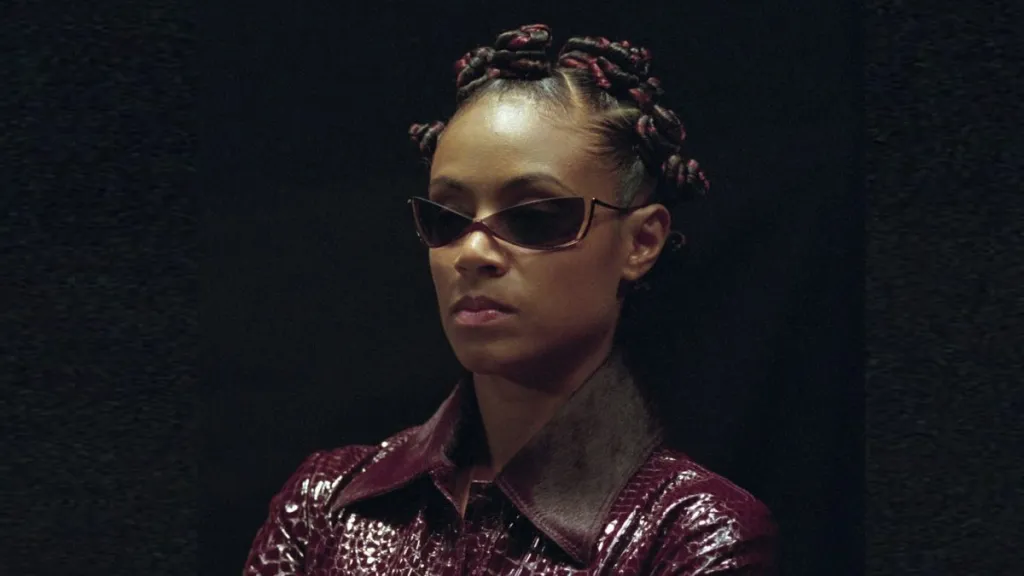
There was no one else like her in games either. Obsessed by the prospect of playing Niobe, I begged for the game on Xbox for Christmas and immediately felt my little heart swell when I was finally slapping up mobs (killing enemies). Enter the Matrix was canon to The Matrix universe, tying the events of The Matrix Reloaded to The Matrix Revolutions. It allowed you to play as either Niobe or Ghost to retrieve a key for Neo that was stolen by the Merovingian. Combat was exciting and movie-like, and the soundtrack kept me engrossed. Countless years later, my heart still pines for a remaster so I can slow-motion wall run while shooting agents.
Niobe was the first nuanced representation of a powerful, independent Black woman I’d seen in sci-fi media. At the time, there was a common throughline in the media that meant a powerful woman would need to be, or appear to be, more “masculine”, especially for Black Women. This perception stood at one end of a spectrum whilst, at the other, was the common depiction of more “feminine” women as clueless damsels in distress who never knew how to proceed when faced with a problem. Now that’s not to say women who do fit these archetypes don’t exist, but there was hardly any nuance or interest in the in between. So it was no wonder that for me, a young girl that was called a boy just because she wanted to play football, was deeply impacted by Niobe.
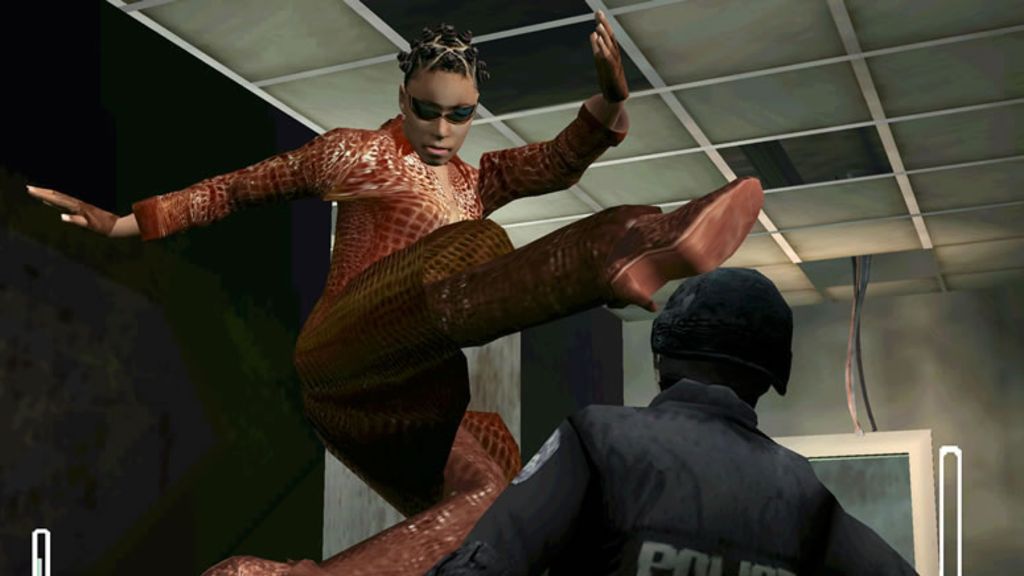
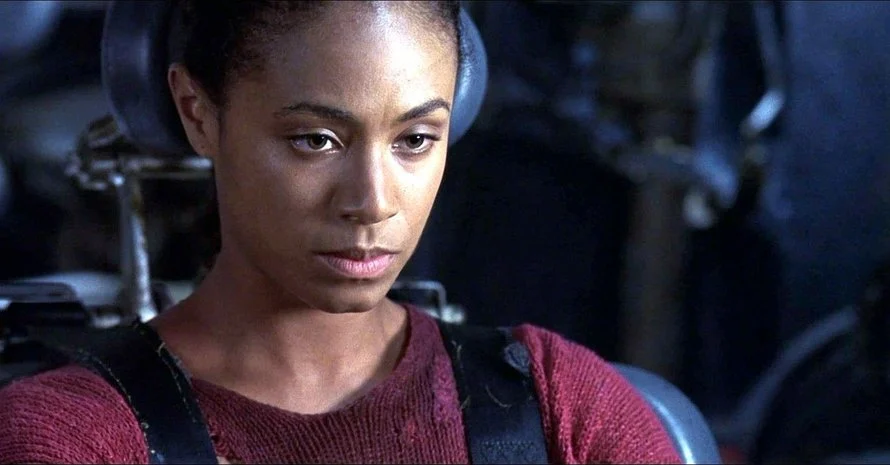
Niobe was not a core character but she was written well. Though flawed, she was beauty, intelligence and power combined. As the captain and pilot of the Logos, she had her own crew. She was desired as the love interest of both Commander Jason Locke and her ex-partner Morpheus. And if that wasn’t enough, Niobe was one of the most skilled martial artists from Zion (within the confines of the matrix). Her strength and power did not prevent her from being sought out romantically, in fact, it was part of the reason.The nuance that I much needed to see was not just by way of the characteristics Niobe embodied, but in the way others reacted to her; she was respected, opinionated and involved.
If Black characters weren’t top priority for game developers in the 2000s, you can be sure Black hair wasn’t a real concern either. The lack of interest combined with the graphical limitations at the time meant Black characters often had straight hair, hexagonal afros or blocky braids that seemed slapped onto their scalps. Niobe’s bantu knots, which were actually Jada’s idea according to Matrix.net, were the perfect touch for a young Black girl bombarded with media’s messaging that her hair needs to be straight to be beautiful. Out of all of Niobe’s qualities and features, it was her bantu knots that were the access point to my heart. If someone like Niobe could be strong, powerful and skilled, and still be perceived as beautiful with a natural hair style then I could temporarily access these qualities by fighting against agents as Niobe in the game. I was emboldened, and began popping out of strange places to randomly attack my uncles with kung fu moves I’d seen in game – fighting sound effects included.
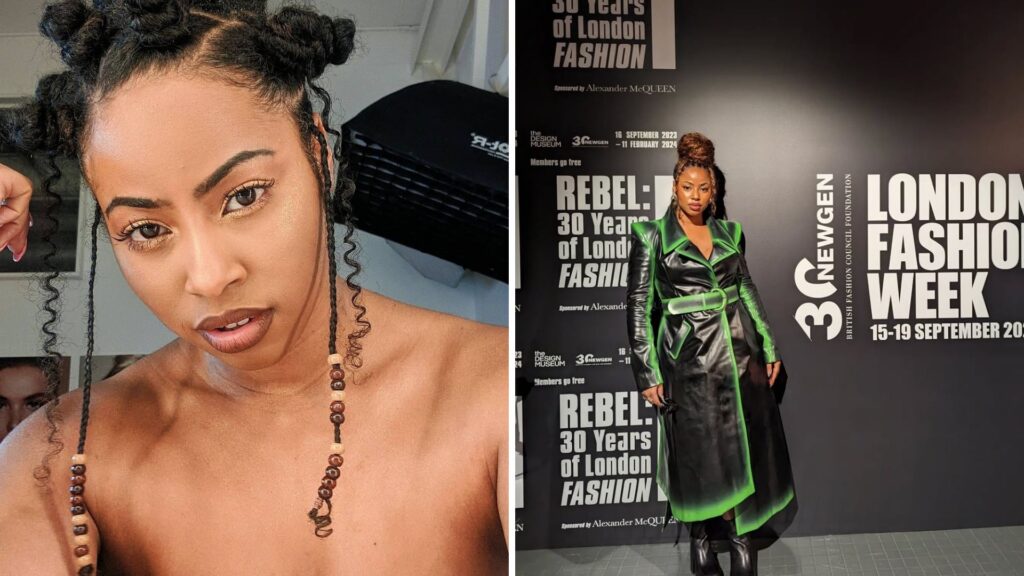
The emotional attachment I have to Niobe still manifests in my style to this day. From the voice in my head convincing me to buy this Hanifa coat (“it’s giving Matrix, it’s giving Niobe”), to wearing bantu knots and other sculptural Black hairstyles in spaces where others would prefer to blend in. Niobe represented an unapologetic confidence in Blackness and womanhood combined that I had never seen in games before. Niobe was and always will be the main character in my eyes and I’m extremely grateful for Jada’s input into her existence, because without her loading into my life in 2003, I do wonder where my confidence, beauty ideals and sense of self would be.