


Gaming Through the Glass Ceiling: How Psychological Horror Clock Out at 2 Tackles Workplace Trauma for Women of Color
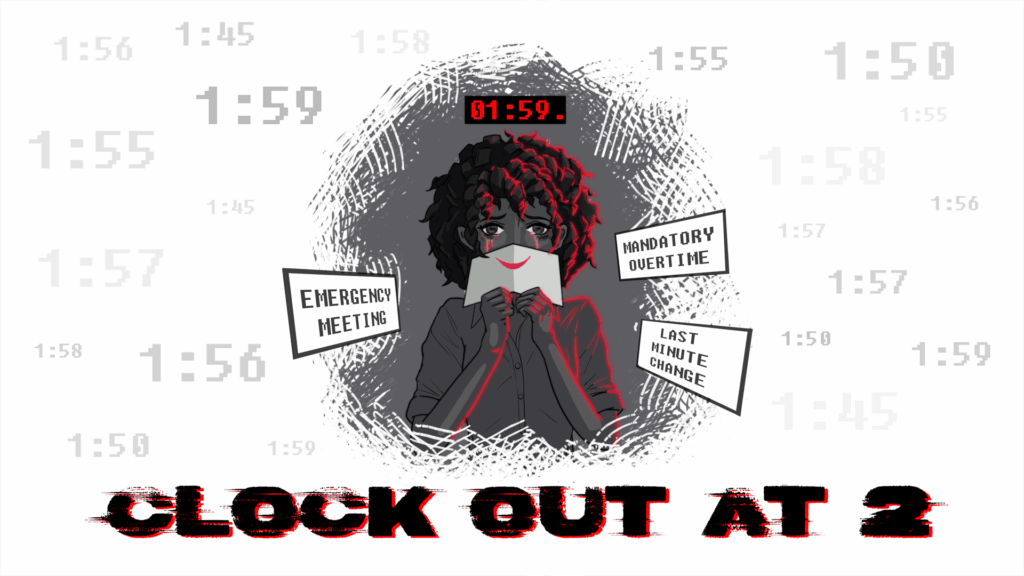
In the fluorescent-lit corridors of corporate America, Celia navigates a daily minefield of microaggressions, unwanted touches, and casual racism. But this isn’t just another workplace drama, it’s the heart of Clock Out at 2, a groundbreaking roguelike narrative that transforms the real-world experiences of women of color into an interactive, intensely relatable horror story.
Developed by Borderless Studios, the visual novel follows Celia, an Afro-Latina who struggles to maintain her mental health while working in corporate America, as she confronts the subtle and not-so-subtle ways her workplace diminishes her. As stress mounts, she begins seeing terrifying creatures, but are they real, or manifestations of her workplace trauma?
Illustrator and pixel artist Ambrowskii from the Borderless team spoke to Black Girl Gamers on the themes of Clock Out at 2, how the team navigated the title’s sensitive, potentially triggering topics, and what patterns gamers may recognize in their own workplace experiences.
From Game Jam Horror to Corporate Reality
Clock Out at 2 began with an unlikely pivot. Originally conceived as a fantasy horror entry for a Spooktober game jam, the project transformed when team members from Melanated Game Kitchen began sharing their own workplace struggles, which led to both teams comforting the person sharing.
“It was a group of people from Melanated Game Kitchen,” explains Ambrowski. “[We figured] if one particular person was struggling with workplace things… then that just kind of morphed into, ‘You know what, this is real horror. This is scary. This is everyday stuff right here.’”
The shift from fantasy to workplace horror proved necessary, leading to a larger conversation and an opportunity to discuss the complex nuances that femmes of color experience in spaces where many should feel a basic level of safety and respect.
The game’s logline captures its stark reality: “Work-life balance doesn’t exist for those deemed lesser. Survive the workday as an Afro-Latina woman. Maintain your mental health or face being sent to HR.”
The Universal Specificity of Celia’s Experience
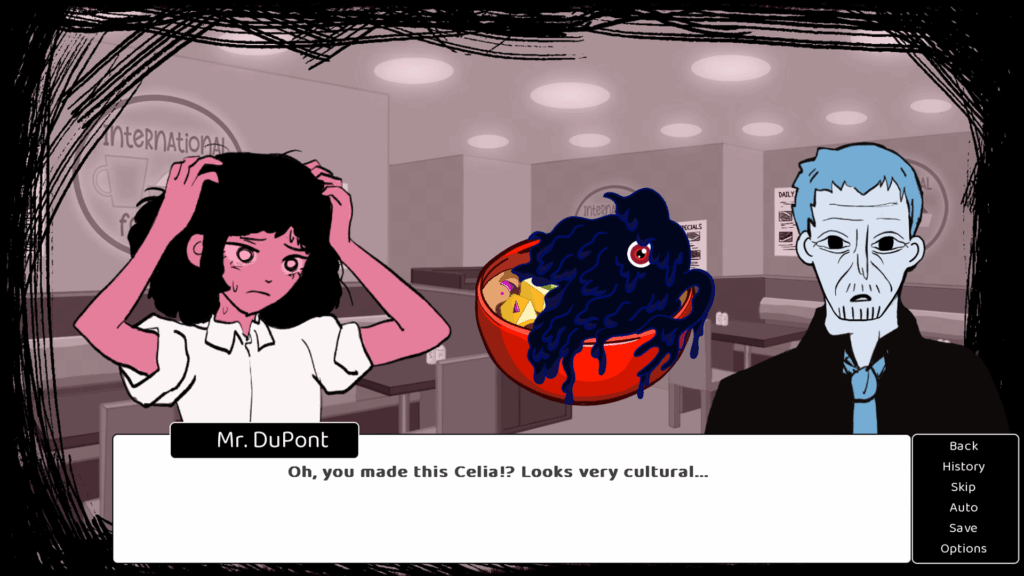
While Celia’s identity as an Afro-Latina woman shapes her story, the team crafted her experiences to resonate broadly with all people of color navigating predominantly white workspaces. “Not necessarily specific to the Afro Latina part of it, but specific as in being discriminated against [because of] your food, being discriminated [against because of ] your hair, Ambrowskii notes, recalling her own experiences with workplace microaggressions. “They want to touch your hair. They want to comment on how your stuff smells, what you’re wearing, [and] cultural differences.”
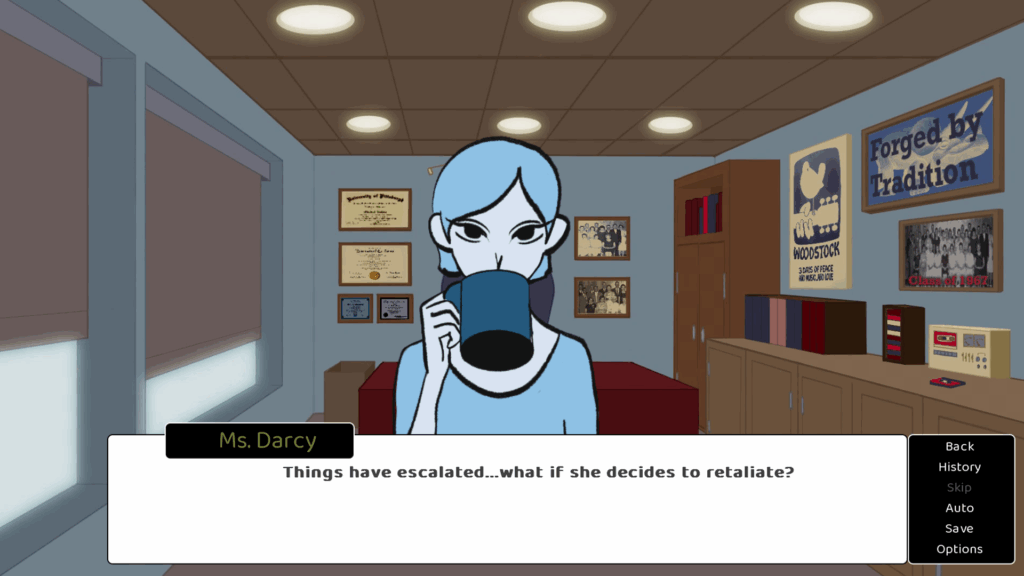
The game’s portrayal of workplace microaggressions hits particularly hard for women of color who face the intersection of racism and sexism. Through characters like “Mr. Mark”—a figure many players will recognize from their own experiences (me included)—the game explores the over-familiarity and inappropriate touching that women of color often endure.
“I can tell you my specific flavor of Mr. Mark,” Ambrowskii shares. “I work kind of a customer service type thing, and bless these people, why do you have to touch my back? Why do you have to caress the shoulder? What’s going… why? The overfamiliarity. Then the ‘toots,’ like, ‘Hey, honey, could you give me that? My eyes aren’t working too well. Go do that for me.’”
The game includes a choose-your-own-adventure mechanic where players can decide how they want to react to these situations through the major trauma responses: fight (speak up for yourself), fawn (allow it to continue), or flight (attempt to escape from the situation altogether). Depending on gamers’ personal experience, this game is a chance to decide how they would react in such a moment, or to cathartically rewrite history.
Mental Health as Gameplay Mechanic
What sets Clock Out at 2 apart is how it integrates mental health management into its core gameplay. Players must actively balance Celia’s self-care with work demands, or risk burnout that prevents her from climbing the corporate ladder successfully.
“If you do not balance your self-care, if you do not take care of Celia regularly and take a break, you hit a wall, you burn out,” Ambrowskii explains. “Something I experienced in all iterations of the game is that I will get swept up in doing work tasks, and I think that is very symbolic of real life.”
Ambrowskii continues, “You get so swept up, and it’s like, ‘Oh, let me just do one more thing. Let me move one more pixel,’ and lo and behold, you’re burnt out and you can’t even bring yourself to rest.”
For the much-needed self-care, the game also includes breathing mini-games where failure brings intrusive “monster faces,” a visceral representation of anxiety and stress. To this, Celia’s grandmother serves as an anchor for the protagonist’s true identity and her healing, reminding players of what truly matters beyond the corporate grind.
A Safe Space for Unspoken Working Class Truths
For many players, Clock Out at 2 serves as both a mirror and a refuge. “Some people who have played it realize that they experienced those things,” Ambrowskii says. “They’re like, ‘Holy crap, this happened to me two weeks ago and I didn’t have the words for it, but now I do because of this game.’”
Due to the game offering players choices,it creates a safe space to explore reactions they might not feel comfortable expressing in real life.
“You might not be able to be like, ‘Oh, get off me,’ in real, real life. But in the game, even if you never do carry it to real life, you may get some relief out of being in the game [version of] Get out. She can be your stand-in, your avatar in-game.”
Also central to Celia’s story is the economic pressure that keeps women of color trapped in toxic work environments. “The most triggering part is Celia feeling helpless,” Ambrowskii reflects. “She feels like she has to take this because she needs this job to take care of her family. She’s kind of like that main breadwinner type person.”
This dynamic—where survival necessitates enduring mistreatment—resonates deeply with women of color who often face limited economic mobility and bear financial responsibilities for extended families.
Looking Ahead For Clock Out at 2
The diverse, predominantly people-of-color development team brings authenticity to every aspect of Celia’s journey. Their mission extends beyond entertainment: “Our mission with Clock Out at 2 is to raise awareness about workplace trauma and the importance of mental health, particularly for marginalized communities. Through Celia’s story, we aim to foster empathy and understanding, encouraging players to reflect on their own work environments and behaviors.”
Abrowskii shared with Black Girl Gamers that Clock Out at 2 will participate in Steam Next Fest from October 14 to 21, featuring a new demo with updated narrative, UI improvements, and additional mini-games. Following the demo release, Borderless Studios plans to pause development to focus on funding and marketing, seeking financial support to complete the full game by the end of Q4 2025.
In transforming workplace trauma into an interactive narrative, Clock Out at 2 creates space for conversations that are desperately needed and rarely had. For women of color navigating corporate America, Celia’s story offers validation, catharsis, and perhaps most importantly, the reminder that they’re not alone in their struggle to simply clock out at 2.