
Read time: 6 minutes
I’ve been chasing the feeling of a good Silent Hill for longer than I’d like to admit. So when the fog rolled in off the coast of Scotland during the hands-off presentation at Summer Game Fest, something in my chest loosened. This was it. This was the one I’d been craving.
Silent Hill: Townfall is a standalone horror-survival spin-off from Screen Burn Interactive—the Glasgow studio formerly known as No Code, behind BAFTA winners Observation and Stories Untold—in partnership with Konami and Annapurna Interactive. The rebrand alone lets long-term fans know just how deep the team is in it: the name Screen Burn is a nod to the “ghost of an image burned into an old CRT screen,” and to the way a game can practically burn itself into your memory. Running on Unreal Engine 5, the title is also the first Silent Hill built entirely in first person, a decision that drew direct comparison to game designer Hideo Kojima’s cancelled installment P.T. but earns the perspective on its own terms.
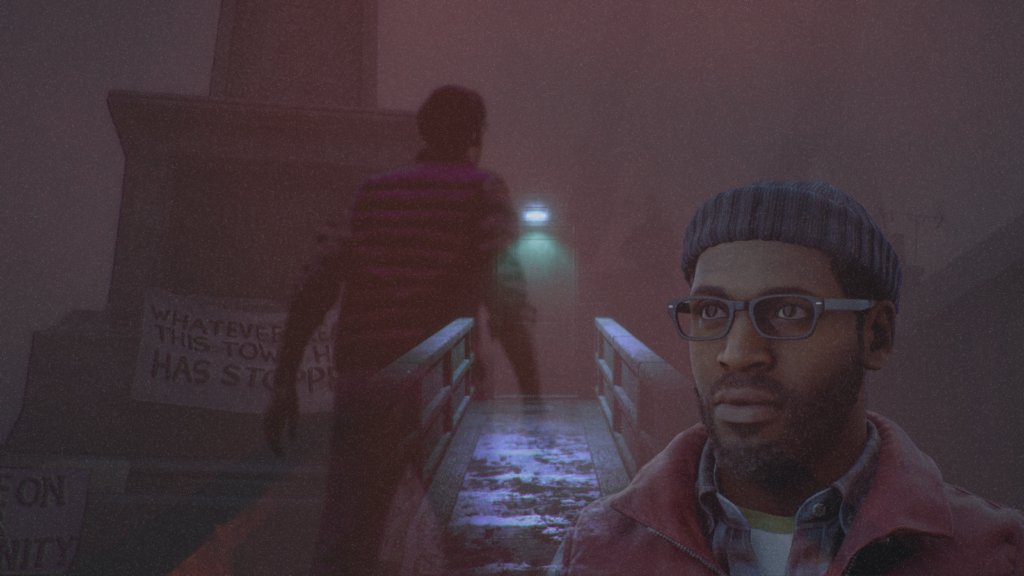
Here’s the setup. It’s 1996, and you play as Simon Ordell (voiced by Fences and When They See Us star Jovan Adepo), who returns to the island town of St. Amelia to “put things right.” He keeps waking up in the water by the docks, in a place he seems to have no memory of, and has to piece together fragments of a buried past to understand his connection to it. Steam frames the plot as “tense evasion, explosive confrontations, and mind-bending puzzles that slowly surface the truth of St. Amelia”—which, having watched the demo, feels accurate.
The choice of 1996 wasn’t a lax decision. In an interview with Eurogamer, director and writer Jon McKellan teased that there are “very specific reasons why” the game lands in that particular year, adding that it sits “on the cusp of when technology started to explode in the home,” the era of the personal computer and the early internet. That analog-anxiety texture is felt in the demo; almost as if it’s the connective tissue tying the whole thing together, keeping me on the edge of my seat.
The environment is doing the heavy lifting
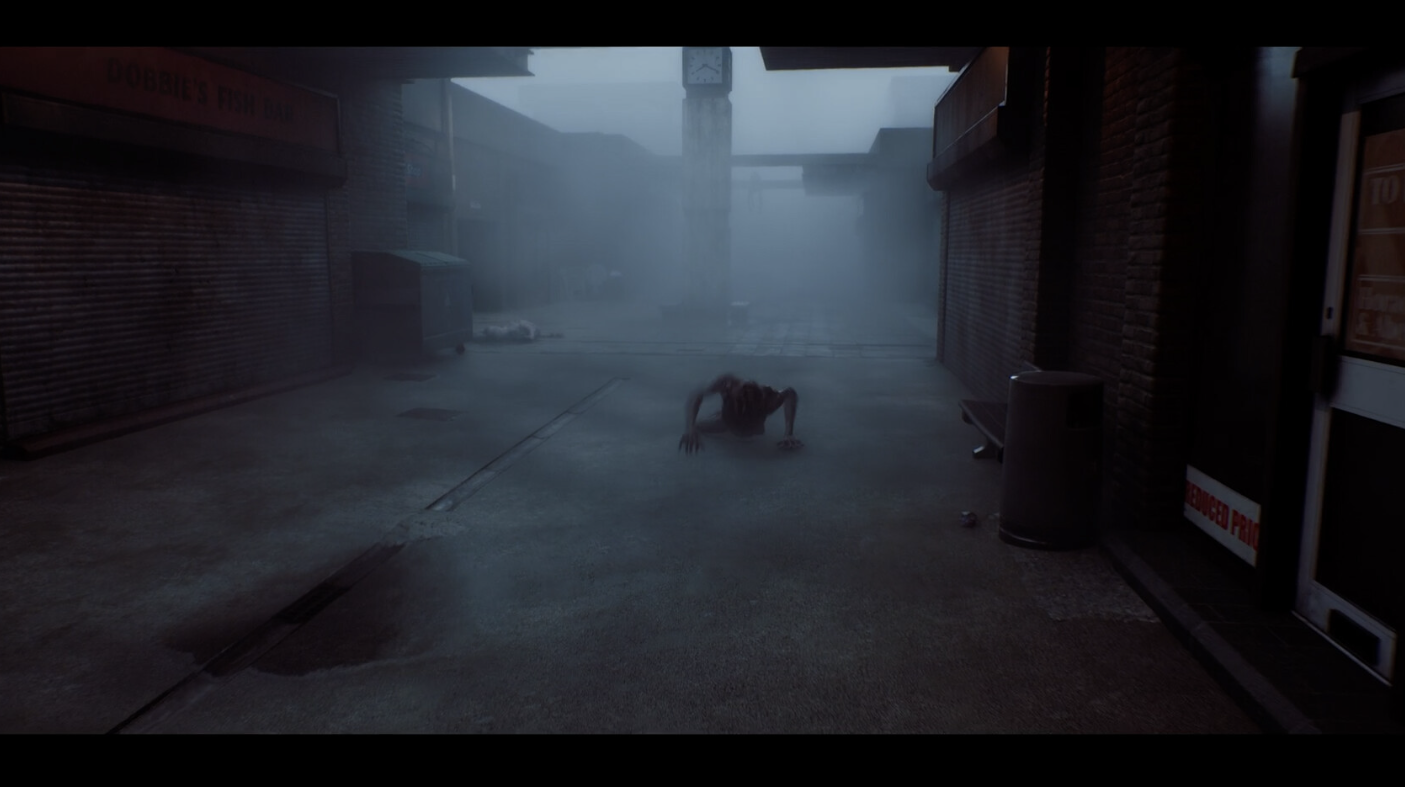
The town of St. Amelia is based on the real Scottish coastal village of St. Monans in Fife. The new title is only the second Silent Hill to step outside the United States after last year’s Silent Hill f went to 1960s Japan, and that’s not a coincidence: it’s more of a course correction.
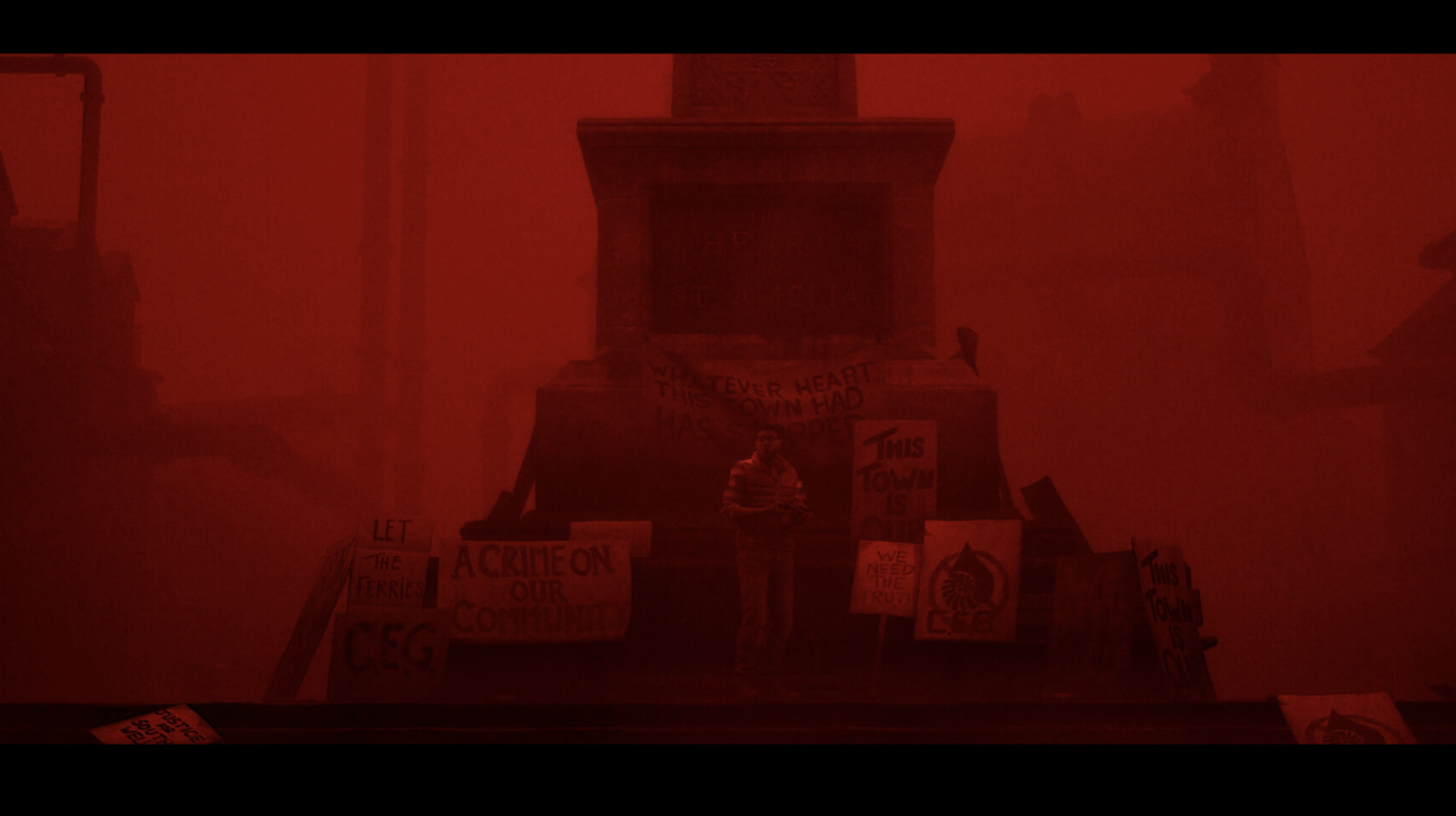
Series producer Motoi Okamoto admitted that “Silent Hill was becoming slightly repetitive” because its American locations kept blurring together, and that Konami wanted to reinterpret “Silent Hill not as a physical location, but as a phenomenon, a state of mind.”
The environment art was the first thing that grabbed me. The moment Simon steps into a house, I clocked the aged, weathered wood on the doorway—and it only compounds from there. Dirt ground into the furniture, scuffs along the door frames, texture worked into the wall panels. It’s a space that reads as genuinely lived-in, the kind of material honesty in the art direction that survival horror lives or dies on. The Scotland-specific detail—thick fog, moody lighting, a claustrophobic stillness in the wind—is engineered to feel unmistakably like Silent Hill while never quite letting you forget where you actually are.
The CRTV is the centerpiece, and it’s smarter than a radio
The series’ iconic static-radio has been reimagined as the CRTV, a handheld CRT device Simon carries throughout. He uses it to tune unstable signals, pull clues for puzzles, and detect the location of nearby enemies. Functionally it’s your read on the space—it lets you make informed calls about where to move and what to avoid, rather than wandering into danger.
It’s also the main reason the game is in first person. McKellan explained that rendering the CRTV’s display in third person would’ve meant bolting it onto a UI element that “would begin to feel like a mini-map,” which he said would feel “really out of place for Silent Hill.” That’s the kind of design logic I respect: the perspective isn’t a trend-chase, it’s downstream of the central mechanic.
Combat and traversal round the skills needed to, well, survive. Simon can defend himself with melee weapons like planks and pipes, or lean on stealth to slip past enemies entirely. Crucially, you’re not armed up front; in the demo, Simon was forced into his first melee only when an enemy cornered him.
Players can peek around corners and use cover to scout a room before committing, which also doubles as a method to spot collectibles. Item combining works the way it always has, and puzzle-solving and map-based navigation stay faithful to the classic loop. Simon’s internal state comes through as inner narration rather than spoken dialogue, which keeps you locked inside his head, a smart fit for a game this interior.
What Screen Burn is holding back on purpose
Here’s the part that has me hooked: the reveal (and much of the promo since) answers almost nothing. Who is Zoe? She’s a nurse (Kezia Burrows) who reaches out to Simon through the CRTV’s static, but her actual tie to him is left deliberately murky. Is she from his past, someone he’s meant to save, or something else entirely?
Why Simon, and why now? There’s also the enigmatic figure named Richard (Terry O’Quinn) who summons Simon back to St. Amelia in the first place, so what does “putting things right” actually mean here? And how much of what Simon experiences is real versus psychological? Silent Hill has always blurred that surrealistic line, and McKellan has been candid that the narrative pulls from real life, “things that have happened to me or members of the team.” I’m genuinely curious how personal this one gets.
As a longtime fan, this is the exact register I’ve wanted the series to hit again: new character, new story, and enough negative space for the imagination to run wild. I love that the new protagonist is Black. I love that they took the fog somewhere new, somewhere outside the U.S., and trusted a small team—just 30 people—to reinterpret what Silent Hill even is. It’s refreshing to see a swing this confident that still respects the roots. And I’m ready to find out who Zoe really is.
Silent Hill: Townfall is available on PlayStation 5 and PC (Windows).