
Read time: 6 minutes
I still remember the first time I played Crazy Taxi on Dreamcast. Hundreds of hours spent with the franchise, memorizing the streets and the specific NPCs that liked to be dropped off while racing myself to see how quickly I could get there. Crazy Taxi rewired my brain to understand time management and ways to accomplish missions quickly, all while singing along to the looping soundtrack.
That was over 25 years ago. Looking back, Crazy Taxi has come a long way. I played the arcade cabinet whenever I went to an arcade that had it, the Dreamcast original, and Crazy Taxi 2 on Xbox. The premise of driving badly with a purpose and getting as much money as possible was such a fun concept for me, and I’m sure I’m not alone in feeling that way. Crazy Taxi is a beloved franchise and for good reason.
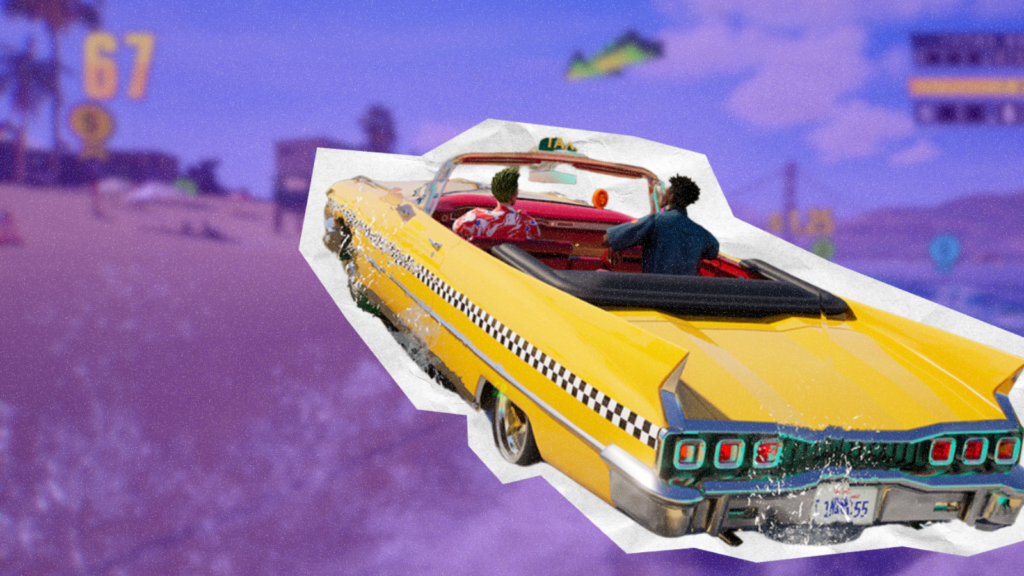
Now fast forward to Crazy Taxi World Tour, announced for a 2027 release back in June during Xbox Games Showcase at Summer Game Fest. The developers ensured that the original elements fans know and loved about the series are still very present while also including new features that only add to the studio’s winning formula. The closed door World Tour presentation was such a big deal, especially for me. I needed to see for myself whether this new addition was going to be treated with the respect it deserved.
The presentation was moderated by thee Kenji Kanno, original creator, director, and designer of Crazy Taxi, who is also serving as the creative producer for World Tour. Before he got into the new game, he spent time on the origin of the franchise’s first title, which may have been my favorite part. Kanno discussed how every driving game in the late ’90s was marketed for racing and he wanted to develop something that captured elements similar to how he felt when watching car chases in movies. (Turns out, he’s a big movie buff!)
A few things stood out from what he showed and talked through. The biggest is that they’re going global—five cities in five countries. Players will revisit the classic West Coast city from the original game, plus four new cities in countries that haven’t been revealed yet.
The storyline grew out of a question the team asked themselves: What kind of story would justify traveling to a bunch of different countries? That’s how they landed on the premise of the series protagonist Axel getting his beloved taxi stolen, and players aim to get it back, chasing it around the world.
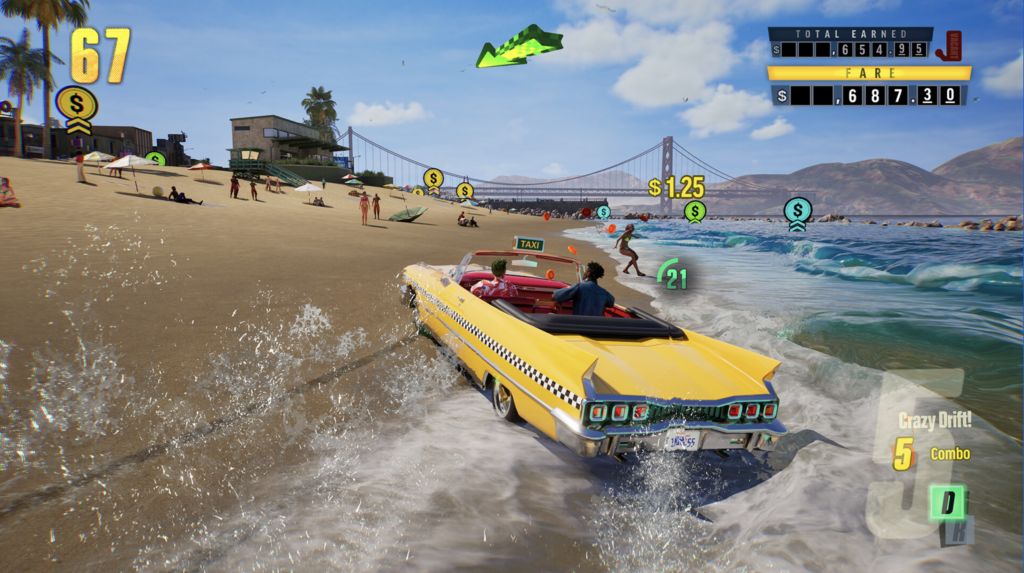
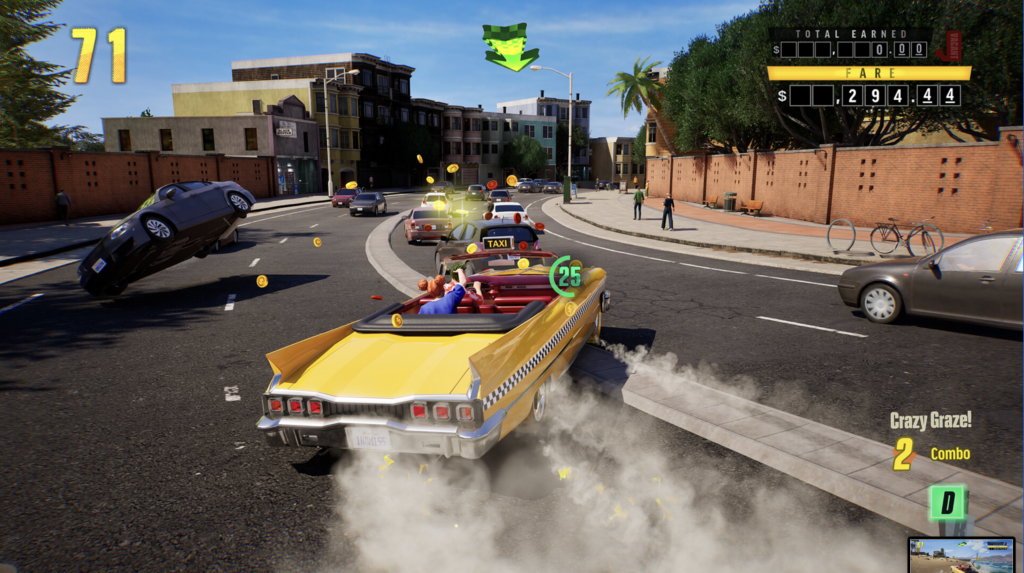
There are new missions beyond the usual taxi fares as well. Kanno demoed a pizza delivery mission and confirmed that each of the five locations has its own exclusive set of challenges, some tied to the main story and others as side quests. There’s also a new layer called “Activities” scattered across the open world, separate from passengers and missions, meant to reward just driving around and exploring rather than the usual fare pickups. On the driving itself, expect new and returning mechanics like the crazy drift and the crazy boost and nitro system, along with additional details that will have to be discovered during gameplay.
Then there’s the shark from the training—it’s a real thing. Kanno’s team in Japan apparently told him not to show it yet, but he did it anyway, pulling up a rough, still-in-development shark encounter during a fishing mission. For longtime fans, classic mode from the original will be available as well, along with the 10 to 30 minute fare missions. And the biggest reveal of all, something I’ve wanted for years: multiplayer.
During the Q&A, there were questions about the soundtrack, car customization, and most controversially, generative AI in development.
Kanno went on to confirm SEGA’s usage of generative AI, specifically on tools that were used in development, mainly as reference material rather than final assets. Still, I don’t think that fully settled the debate for everyone.
Per World Tour‘s Steam page, their official statement on the matter reads, “At SEGA Corporation, we utilize generative AI as an optional support tool for developers, with the aim of enabling developers to focus more on creative tasks and deliver better experiences to our players.”
The declaration sparked immediate backlash online, with many critics citing artistic integrity, the environmental cost of compute, and concerns about training-data sourcing.
According to Let’s Data Science, game studios are increasingly experimenting with generative AI for noncentral assets like background art, textures, and iteration aids. Their industry-pattern observations note that these AI outputs are typically run through human review and folded into existing pipelines—an approach that lowers some technical risk, while also creating new questions about provenance and quality control for art and asset-management workflows.
Let’s Data Science situates SEGA’s disclosure within an ongoing tension in the industry: some studios openly embracing AI tools, while parts of the creative community and player base remain skeptical or downright reject the technology altogether. Their analysis finds that public backlash tends to center less on technical capability and more on concerns about where training data comes from, how original artists are attributed, and whether they’re compensated.
They point to a few threads worth watching for the skeptical and to remain informed: more detailed statements from SEGA or the development teams specifying which tools or asset classes were actually involved; community and developer responses citing concrete examples of AI-generated assets in early footage or demos; and any legal or moderation developments around training-data claims and artist licensing that could shift how studios handle disclosure.

After the presentation ended, I got the chance to meet Kanno, to shake the hand of the guy who created a franchise I’ve dumped hundreds of hours into. It was a full circle moment. While I wasn’t able to tell him how much the series meant to me due to the language barrier, I did thank him a lot in Japanese and told the SEGA team what the encounter and the new release means for my inner child.
I’ve spent enough hours with this franchise to know the difference between a cash grab banking on nostalgia and a work of art created by people who truly care. Watching Kanno get genuinely excited about features he wasn’t even supposed to share told me everything I needed to know. It was wholesome—it felt like he was still trying to convince a room full of people that taxis are cool. World Tour is made by the guy who invented the whole concept of driving a taxi in a video game, and he’s still having fun with it 25 years later.
Am I going to dump another hundred hours into this one? Absolutely without a doubt. 25 years in and the series hasn’t run stale. After meeting the man who started it all, I don’t think 2027 can come soon enough.
Crazy Taxi World Tour is slated to launch in 2027 on PlayStation 5, Xbox Series X/S, Nintendo Switch 2, and PC.